Inguinal Hernia in Children
A groin swelling that appears on crying or straining.
What is Inguinal Hernia in Children?
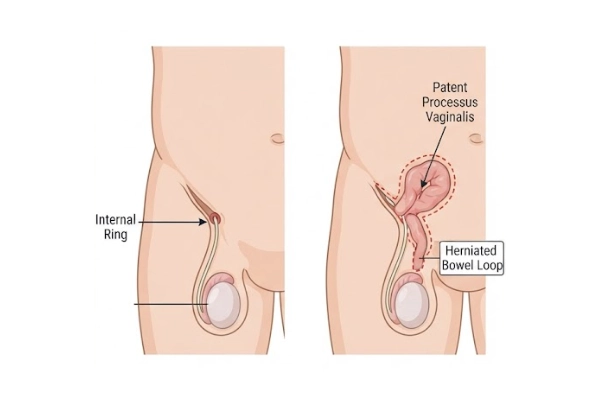
Before birth, a narrow channel runs from the abdomen down into the groin and scrotum. It normally seals off. If it stays open, abdominal contents — usually bowel, or an ovary in girls — can slide down it. That is an inguinal hernia.
It shows as a bulge in the groin, or in the scrotum in boys, that appears when the child cries, coughs, strains or stands, and disappears when the child is calm or lying down.
A childhood inguinal hernia is different from an adult one. It is not caused by weakness or heavy lifting, and it will not close by itself. There is no such thing as waiting for it to go.
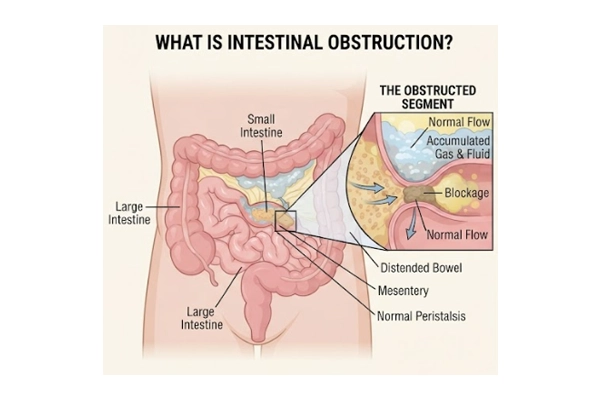
The reason it is repaired promptly is the risk of incarceration — bowel getting stuck in the channel, losing its blood supply and becoming an emergency. That risk is highest in the first year of life.
In your language
Inguinal Hernia in Children
A groin swelling that appears on crying or straining.
Before birth, a narrow channel runs from the abdomen down into the groin and scrotum. It normally seals off. If it stays open, abdominal contents — usually bowel, or an ovary in girls — can slide down it. That is an inguinal hernia.
குழந்தைகளில் இடுப்பு குடலிறக்கம்
குழந்தைகளின் இடுப்பு குடலிறக்கம் தானாகவே சரியாகாது — அறுவை சிகிச்சை மட்டுமே தீர்வு. அழும்போதோ முக்கும்போதோ இடுப்பில் அல்லது விதைப்பையில் வீக்கம் தெரியும், அமைதியாகும்போது மறையும். ஆபத்து என்னவென்றால் குடல் அதனுள் சிக்கிக்கொள்வது. வீக்கம் உள்ளே போகவில்லை, கடினமாக அல்லது சிவப்பாக உள்ளது, குழந்தை வாந்தி எடுக்கிறது, பால் குடிக்க மறுக்கிறது என்றால் — உடனடியாக மருத்துவமனைக்கு செல்லுங்கள். பட்டை அல்லது கட்டு போடுவது பயனற்றது. பொதுவாக ஒரே நாள் அறுவை சிகிச்சையில் சரிசெய்யலாம்.
കുട്ടികളിലെ ഇൻഗ്വൈനൽ ഹെർണിയ
കുട്ടികളിലെ ഇൻഗ്വൈനൽ ഹെർണിയ സ്വയം മാറില്ല — ശസ്ത്രക്രിയ മാത്രമാണ് പരിഹാരം. കരയുമ്പോഴോ ബലം പിടിക്കുമ്പോഴോ ഞരമ്പിന്റെ ഭാഗത്തോ വൃഷണസഞ്ചിയിലോ വീക്കം കാണാം, ശാന്തമാകുമ്പോൾ മറയും. കുടൽ അതിനുള്ളിൽ കുടുങ്ങുന്നതാണ് അപകടം. വീക്കം അകത്തേക്ക് പോകുന്നില്ല, കടുപ്പമോ ചുവപ്പോ ഉണ്ട്, കുട്ടി ഛർദ്ദിക്കുന്നു, പാൽ കുടിക്കാൻ വിസമ്മതിക്കുന്നു എങ്കിൽ ഉടൻ ആശുപത്രിയിൽ എത്തിക്കുക. ബെൽറ്റോ കെട്ടോ ഉപയോഗിച്ചിട്ട് കാര്യമില്ല. സാധാരണ ഒരു ദിവസത്തെ ശസ്ത്രക്രിയ മതി.
What Parents Notice
Not every child shows every sign. If something on this list matches your child, it is worth an examination rather than a guess.
- A soft bulge in the groin or scrotum that appears on crying, coughing or straining
- The bulge disappears when the child relaxes or lies down
- It may be noticed only at bath time or nappy changes
- Mild discomfort or a dragging feeling in older children
- In girls, a firm lump in the groin, which may be an ovary within the hernia
- Emergency signs: a lump that will not go back, is firm, red or very tender, with vomiting, refusal to feed, a swollen tummy or a distressed inconsolable child — go to hospital immediately, do not wait for morning
How It Is Confirmed
- Diagnosis is clinical — the surgeon examines the groin, feels the cord, and looks for the bulge with the child upright or straining
- A parent’s phone photograph of the bulge is genuinely useful, since the hernia often hides during the consultation
- Ultrasound is used where the examination is inconclusive, or to distinguish a hernia from a hydrocele or an undescended testis
- The opposite side is assessed too, since a hernia on one side raises the chance of one on the other
How It Is Treated
- The treatment is surgical repair — herniotomy, in which the open channel is tied off. In children the muscle does not need reinforcing and mesh is not used.
- It can be done through a small groin incision or laparoscopically. Laparoscopy has the advantage of letting the surgeon inspect the other side through the same small openings.
- Most repairs are day-care procedures, with the child home the same day.
- An incarcerated hernia is first gently reduced where possible, and repair is then done during the same admission rather than sending the child home to wait.
- Trusses, belts and binders have no place in the treatment of a childhood hernia.
Does My Child Need Surgery?
Not every child with Inguinal Hernia in Children needs an operation. These are the situations in which surgery is advised — and the decision is always made after examining your child, never from a description alone.
Once diagnosed — a childhood inguinal hernia is repaired electively but without unnecessary delay
Sooner in babies, because the risk of incarceration is highest in the first year
As an emergency if the hernia is stuck, tender or associated with vomiting
Premature babies are usually repaired before discharge or shortly afterwards, with appropriate anaesthetic precautions
What Happens Over Time
Excellent. A childhood hernia repair is a definitive operation and recurrence is uncommon. Children treated before the hernia becomes stuck do better than those who present as an emergency, which is the argument for repairing it promptly.
This describes what usually happens, not what will happen to your child. The surgeon will give you a specific picture after examining them.
Can It Be Prevented?
It cannot be prevented — the channel was already open at birth. Trusses and belts do not help and are not used in children.
From First Visit to Going Home
What happens, in order, so that nothing on the day comes as a surprise.
Consultation
Dr. Pratheep Samraj examines your child and goes through the history, earlier reports and any treatment already given.
Investigation
Only the tests that change the decision are asked for — commonly an ultrasound, blood tests, and occasionally an X-ray or a scopy.
Explanation
You are told what the condition is, whether it needs surgery, what happens if you wait, and what the operation involves.
Treatment
If surgery is appropriate it is planned with paediatric anaesthetic cover, with ICU and NICU support available in the hospital.
Follow-up
You go home with written instructions and a review date, and you can reach the hospital by phone or WhatsApp in between.
Hospital stay
Day care for most children. Very young infants and ex-premature babies are kept overnight for monitoring.
Recovery at home
Children are usually comfortable within 2 to 3 days. Back to school in about a week; avoid cycling and rough play for 2 to 3 weeks.
Follow-up
One review at 2 to 4 weeks. Recurrence after a properly performed childhood herniotomy is uncommon.
Please bring with you: all previous scan reports, blood test reports, discharge summaries, records of any earlier operation, current medicines, and your child’s immunisation card. Photographs on your phone of a swelling that comes and goes are genuinely useful.
Please note: this page is general information about Inguinal Hernia in Children, not advice about your child. Timing, suitability for surgery and the expected result differ from child to child and are decided only after clinical evaluation.
Questions Parents Ask
If your question is not here, send it on WhatsApp — you will get an answer from the hospital team.
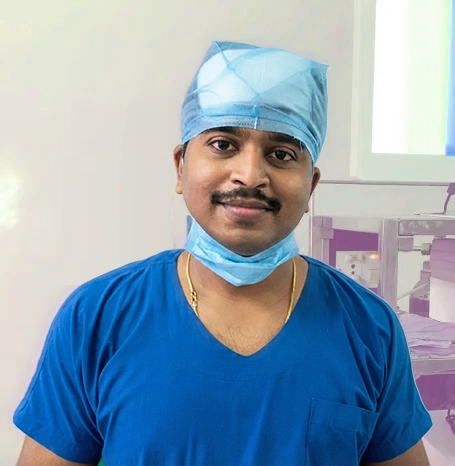
Dr. Pratheep Samraj
Consultant Paediatric & Neonatal Surgeon · Palliyadi, Kanyakumari
Super-specialist surgical care for newborns, infants and children, with expertise in paediatric urology, congenital anomalies, gastro-intestinal surgery and minimally invasive surgery.
Related Conditions
A groin swelling in a child should be repaired, not watched.
Childhood hernias do not close by themselves, and the risk is the day it gets stuck. If it will not go back and the child is in pain, that is an emergency — come straight in.
Consultation 10:00 AM - 1:00 PM & 4:00 PM - 8:00 PM · 24-hour laboratory & pharmacy
In an emergency — green vomiting in a baby, a groin swelling that will not go back, severe tummy pain, or a newborn not passing urine or meconium — come straight to the hospital or to your nearest emergency department. Do not wait for a reply to a message.