Tracheo-Oesophageal Fistula
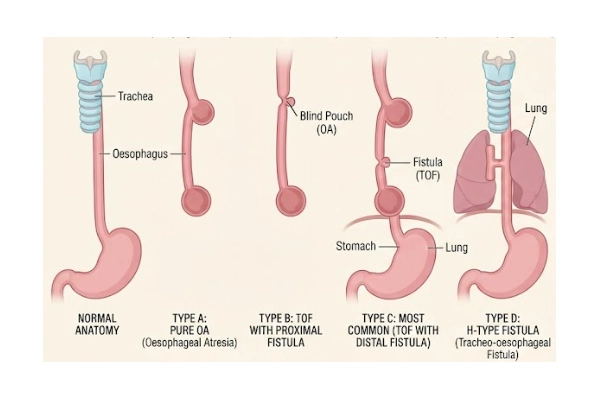
The food pipe ends blindly and may connect to the windpipe.
What is Tracheo-Oesophageal Fistula?
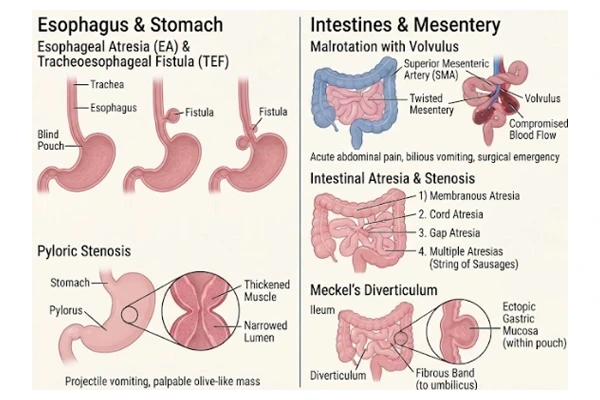
In oesophageal atresia the food pipe does not form as a continuous tube — it ends in a blind pouch. In most babies there is also an abnormal connection, a fistula, between the lower part of the food pipe and the windpipe.
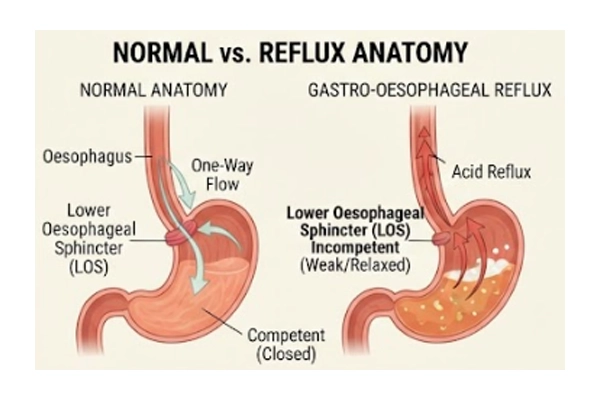
The consequences are immediate: saliva cannot be swallowed, so the baby froths at the mouth, and anything fed goes into the lungs. Stomach acid can also travel up the fistula into the airway.
A newborn who froths continuously, chokes and turns blue with the first feed has this condition until proved otherwise.
It may be suspected before birth from excess amniotic fluid and a stomach that cannot be seen on the scan.
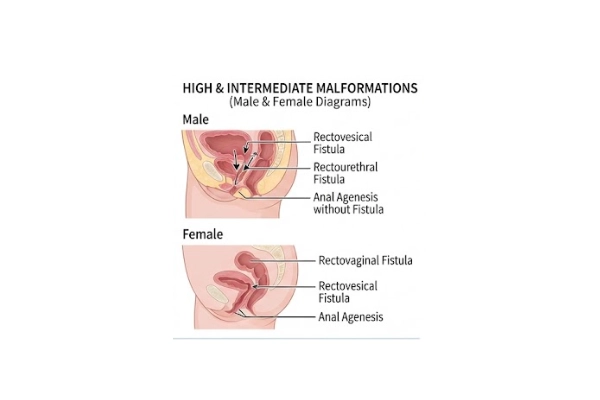
Associated abnormalities are common, particularly of the heart, spine, kidneys and anus — the VACTERL group — so the baby is screened for these.
Repair is specialised newborn chest surgery requiring neonatal intensive care. Where that level of care must be provided elsewhere, the family is told directly and transfer is arranged without delay.
In your language
Tracheo-Oesophageal Fistula
The food pipe ends blindly and may connect to the windpipe.
In oesophageal atresia the food pipe does not form as a continuous tube — it ends in a blind pouch. In most babies there is also an abnormal connection, a fistula, between the lower part of the food pipe and the windpipe.
உணவுக்குழாய் – மூச்சுக்குழாய் இணைப்பு குறைபாடு (TEF)
இதில் உணவுக்குழாய் முழுமையாக உருவாகாமல் ஒரு மூடிய பையாக முடிந்துவிடும்; பெரும்பாலும் மூச்சுக்குழாயுடன் ஒரு அசாதாரண இணைப்பும் இருக்கும். முக்கிய அறிகுறி: பிறந்த குழந்தையின் வாயிலிருந்து தொடர்ந்து நுரை போன்ற எச்சில் வருவது, முதல் முறை பால் கொடுக்கும்போது மூச்சுத்திணறி நீலமாவது. இந்த அறிகுறிகள் இருந்தால் பால் கொடுப்பதை உடனே நிறுத்தி மருத்துவரைப் பாருங்கள் — பால் நுரையீரலுக்குள் செல்லும் ஆபத்து உள்ளது. மூக்கு வழி குழாய் இரைப்பைக்குள் செல்லாதது இதை உறுதிப்படுத்தும். சிகிச்சை: அறுவை சிகிச்சை மூலம் இணைப்பை மூடி உணவுக்குழாயை இணைத்தல். இதயம், சிறுநீரகம் உள்ளிட்ட பிற குறைபாடுகளும் இருக்கலாம் என்பதால் முழு பரிசோதனை தேவை.
അന്നനാളം–ശ്വാസനാളം സന്ധി വൈകല്യം (TEF)
ഇതിൽ അന്നനാളം പൂർണമായി രൂപപ്പെടാതെ അടഞ്ഞ ഒരു സഞ്ചിയായി അവസാനിക്കും; മിക്കപ്പോഴും ശ്വാസനാളവുമായി അസാധാരണമായ ഒരു ബന്ധവും ഉണ്ടാകും. പ്രധാന ലക്ഷണം: നവജാത ശിശുവിന്റെ വായിൽ നിന്ന് തുടർച്ചയായി പതയുന്ന ഉമിനീർ വരിക, ആദ്യ തവണ പാൽ കൊടുക്കുമ്പോൾ ശ്വാസം മുട്ടി നീലനിറമാകുക. ഈ ലക്ഷണങ്ങളുണ്ടെങ്കിൽ പാൽ കൊടുക്കുന്നത് ഉടൻ നിർത്തി ഡോക്ടറെ കാണണം — പാൽ ശ്വാസകോശത്തിലേക്ക് പോകാൻ സാധ്യതയുണ്ട്. മൂക്കിലൂടെയുള്ള ട്യൂബ് ആമാശയത്തിൽ എത്താത്തത് ഇത് സ്ഥിരീകരിക്കും. ചികിത്സ ശസ്ത്രക്രിയയാണ്.
What Parents Notice
Not every child shows every sign. If something on this list matches your child, it is worth an examination rather than a guess.
- Frothy white bubbles at the mouth and nose that keep returning after suctioning — the earliest sign
- Coughing, choking and turning blue with the first feed
- A nasogastric tube that will not pass down into the stomach
- Abdominal distension where there is a fistula allowing air into the stomach
- Breathing difficulty and recurrent aspiration
- Excess amniotic fluid during pregnancy, with a stomach bubble not visible on scan
- In a rare H-type fistula, presentation is later — recurrent choking with feeds and repeated chest infections
How It Is Confirmed
- Attempting to pass a nasogastric tube: it coils and cannot be advanced — a simple bedside test that makes the diagnosis
- X-ray of the chest and abdomen with the tube in place, showing it curled in the upper pouch, and showing whether gas is present in the stomach
- Echocardiogram, both for associated heart abnormalities and to determine the side of the aortic arch before surgery
- Ultrasound of the kidneys and spine, and examination of the anus, as part of VACTERL screening
- Bronchoscopy in selected cases to define the fistula
How It Is Treated
- Before surgery: the baby is kept head-up, a tube is placed in the upper pouch on continuous suction to prevent saliva spilling into the lungs, feeding by mouth is stopped completely, and intravenous fluids and antibiotics are given.
- Surgical repair: the fistula is divided and closed, and the two ends of the food pipe are joined. This is done through the chest, either open or thoracoscopically.
- Where the gap between the two ends is too long, a staged approach is used, with feeding by gastrostomy while the ends are allowed to grow closer before joining.
- Neonatal intensive care afterwards, with ventilation as required and feeds introduced once healing is confirmed, often after a contrast study.
- Long-term follow-up: reflux is very common after repair, some children develop a narrowing at the join needing dilatation, and a barking cough from tracheomalacia is frequent and usually improves with growth.
Does My Child Need Surgery?
Not every child with Tracheo-Oesophageal Fistula needs an operation. These are the situations in which surgery is advised — and the decision is always made after examining your child, never from a description alone.
In the first days of life, once the baby is stable and associated conditions have been assessed — particularly the heart
Urgently where there is significant aspiration or a large fistula causing gastric distension
A staged approach where the gap is long or the baby is very premature or unwell
Later, for an H-type fistula diagnosed in an older infant
What Happens Over Time
Most children who have this repaired go on to eat, grow and develop normally. Reflux is very common afterwards, a narrowing at the join may need stretching, and a barking cough from a soft windpipe is usual in the early years and improves with growth. Associated heart and kidney conditions influence the overall picture.
This describes what usually happens, not what will happen to your child. The surgeon will give you a specific picture after examining them.
Can It Be Prevented?
It cannot be prevented. It forms in the early weeks of pregnancy.
From First Visit to Going Home
What happens, in order, so that nothing on the day comes as a surprise.
Consultation
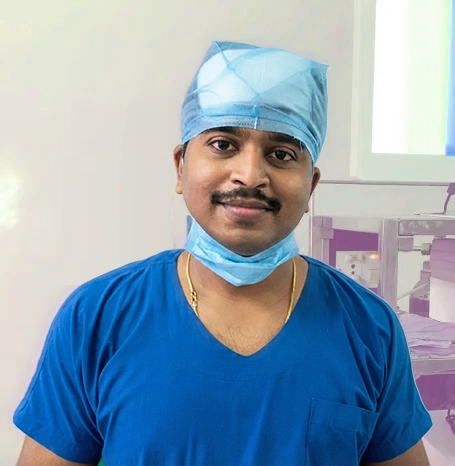
Dr. Pratheep Samraj examines your child and goes through the history, earlier reports and any treatment already given.
Investigation
Only the tests that change the decision are asked for — commonly an ultrasound, blood tests, and occasionally an X-ray or a scopy.
Explanation
You are told what the condition is, whether it needs surgery, what happens if you wait, and what the operation involves.
Treatment
If surgery is appropriate it is planned with paediatric anaesthetic cover, with ICU and NICU support available in the hospital.
Follow-up
You go home with written instructions and a review date, and you can reach the hospital by phone or WhatsApp in between.
Hospital stay
Usually two to three weeks or more, depending on the baby’s condition, prematurity and how feeding progresses.
Recovery at home
Feeds start after healing is confirmed. Reflux and a barking cough are common afterwards and are managed actively rather than ignored.
Follow-up
Long-term — feeding, growth, reflux, swallowing, and dilatation of the join if a narrowing develops.
Please bring with you: all previous scan reports, blood test reports, discharge summaries, records of any earlier operation, current medicines, and your child’s immunisation card. Photographs on your phone of a swelling that comes and goes are genuinely useful.
Please note: this page is general information about Tracheo-Oesophageal Fistula, not advice about your child. Timing, suitability for surgery and the expected result differ from child to child and are decided only after clinical evaluation.
Questions Parents Ask
If your question is not here, send it on WhatsApp — you will get an answer from the hospital team.
Dr. Pratheep Samraj
Consultant Paediatric & Neonatal Surgeon · Palliyadi, Kanyakumari
Super-specialist surgical care for newborns, infants and children, with expertise in paediatric urology, congenital anomalies, gastro-intestinal surgery and minimally invasive surgery.
Related Conditions
A newborn who froths, chokes on the first feed and cannot take a tube needs a surgeon.
Stop feeds, keep the baby head-up with the upper pouch suctioned, and come in. It is repairable, and early transfer is what makes the difference to the outcome.
Consultation 10:00 AM - 1:00 PM & 4:00 PM - 8:00 PM · 24-hour laboratory & pharmacy
In an emergency — green vomiting in a baby, a groin swelling that will not go back, severe tummy pain, or a newborn not passing urine or meconium — come straight to the hospital or to your nearest emergency department. Do not wait for a reply to a message.